Children’s Concept of Death

Children’s Concept of Death, by Age

Under three years of age:

Even young children are sensitive to the changes that a loss can bring.  They notice increased levels of anxiety and sadness in their caregivers.  New people may suddenly be in the home, and the child’s routine may be disrupted.  Though a small child will not be able to intellectually understand what death is, he or she will notice these changes.

Ages three to five:

At this age, children don’t understand the concept of forever.  They will see death as temporary, reversible or a restricted form of existance.  Still, the separation caused by death is particularly frightening to children this age.  They need reassurance that their emotions are normal and okay.  “Magical thinking” is common at this age and children may believe their thoughts or actions are somehow connected to illness or death.  They sometimes connect unrelated events in highly creative ways in an attempt to make sense of a loss.  Clear, direct explanations of what happened and why are especially important for this age.

Ages six to nine:

Children aged six to nine begin to understand death is final, but they think it happens only to other people.  They may think death is a  scary creature or person who takes people away.  Or they might fear death is contagious.  Some may continue to believe that thoughts cause events.  Some may continue to think that thoughts make things happen.  Clear explanations continue to be vital.  Pointed curiosity about physical details is common.

Ages nine to twelve:

Older children may have experienced the death of a relative or, more often, the loss of a pet.  They know death is final and comes to all plants and animals.  Still, they see death as distant from themselves and may be extremely interested in the physical process of dying.  More commonly, children this age will worry about the effects the loss will have on their immediate future.

Adolescents:

Death for this age group is both fascinating and frightening.  As they struggle to forge their own identities, death is particularly threatening.  Losses may make teens feel more child-like and dependent.  Teenagers may feel the situation requires them to step into an adult role in response to loss.  Teenagers are uncomfortable with anything that makes them different from their peers.

Here are some general guidelines adults can follow to help children cope:

  • Give timely, accurate information
  • Give children a chance to ask all of the questions they have
  • Provide as much routine and security as possible
  • Let children participate and be a positive role model for them
  • Return to Children, Teens and Loss main page

(source: KCH)

Timetables for Grief

Month One

In the first month, you may be so busy with funeral arrangements, visitors, paperwork and other immediate tasks that you have little time to begin the grieving process.  You also may be numb and feel that the loss is unreal.  This shock can last beyond the first month.

Month Three

The three-month point is particularly challenging for many grieving people.  Visitors have gone home, cards and calls have pretty much stopped coming, and most of the numbness has worn off.  Well-meaning friends and family, who don’t understand the grief process, may pressure you to “get back to normal.”  You may be just beginning the very painful task of understanding what this loss really means.

Months Four through Twelve

You continue to work through many tasks of learning to live with loss.  You begin to have more good days than bad days.  Still, even late into the last half of the first year, difficult periods sometimes will crop up with no obvious trigger.  These difficult periods are normal; they are not a setback or lack of progress.

Significant Anniversaries

During the first year, personal and public holidays present additional challenges.  Your baby’s birthday, due date, other family member’s birthdays, weddings, anniversaries, and family and other reunions can be painful and difficult.  Medical anniversaries, such as the date of diagnosis, also can bring up memories.  Planning a special activity for the day may be comforting. (source: KCH)

Protected: Addison and Dakota

This content is password-protected. To view it, please enter the password below.

Protected: Caring for Carleigh

This content is password-protected. To view it, please enter the password below.

Protected: Stanfords Sacrifice

This content is password-protected. To view it, please enter the password below.

Protected: An Empty Place

This content is password-protected. To view it, please enter the password below.

Protected: A Tragedy

This content is password-protected. To view it, please enter the password below.

My Little Garden Amongst the Stone

My little garden amongst the stone

I planted a little garden, amongst the stones today   The dirt was dry and rough, from that cold and bitter day

The sun was warm, and the grass no longer brown The green shoots all bursting, and buds falling all around

… The sweetness of the wind, the met the empty little plot   The clods of dirt now broken, in that tiny little spot

In brokenness life met with death, worked gently into the soil   Each seed tenderly planted, to end my labouring toil

Fleeting love, broken memories, now watered the little dream   The tiny love placed in the soil, now flowing like a stream

I tried ebb the flow, lest it float the seeds away   Of the seeds newly planted, that very special day

But as they flowed I was reminded of a new life’s little story   Birthed in love and bred pain a tiny gift from glory

I held birthed love and cradled it, and new that one day   We would come to visit this little garden, where pain can never stay

In Loving Memory of  Emma Marrie Rose    Born in to glory   December 24 2011 Melody Lily Anne

SBD Sacred Circles


The Origin of Blessingways and Sacred Birth & Bereavement Circles

While the name Blessingway is becoming more widely understood to mean a kind of “baby shower of spiritual gifts rather than physical ones“, the origin traces to the Navajo tribespeople, and out of respect for their traditions (you are invited to learn more, for example, at this link), here at stillbirthday, we draw from the Blessingway term you might be familiar with, but then we point to our own name for our own interpretation of this beautiful event, coining the name Sacred Circles.  This is quite appropriate as the burning zero candle is our trademarked image.  Many of the events for our Sacred Circles are inspirations of Doran Richards of the Blessing God’s Way website and resources.

I invite you also to visit our Loved Ones  and Farewell Celebrations resources for even more suggestions in offering love to bereaved loved ones.


This is the first and only Blessingway specifically created to honor pregnancy, to honor the mother,

and to validate the very real life, and death, of your baby.

  • The celebration will be a time of validating the mother and her mixed and real emotions, as well as a time to celebrate her very real child, even for the very short time the child is alive – in the womb or after birth.
  • The celebration will be personal; there is no exact “one right way” to host one.

Tips to making this celebration successful for the mother:

  • A Celebrating Pregnancy Blessingway, or, Sacred Circle is a time of intimate fellowship.  The mom’s closest friends and most special people should be all who are invited.  Please keep the guest list less than about 16 people.
  • The celebration might be in an inviting and soothing location, where the mom is comfortable being.
  • It might include praying over the mother and her family as she faces the birth and death of her baby.
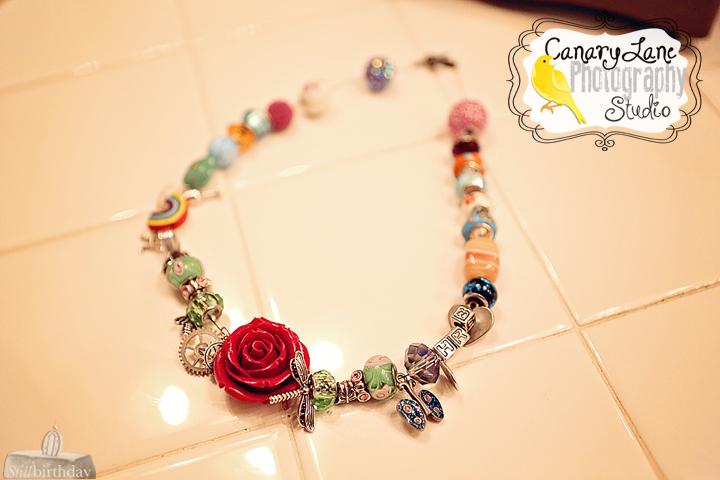
  • It should include personalized gifts, brought by every person attending.  These can include written scriptures, poems, or a letter, to be read aloud by the giver, to the mother, at the celebration.  Other gifts may include: a journal, an inspirational book about infant loss, a handmade baby blanket, or a bead, specially chosen for the mother, and strung into a handmade necklace that the mother can wear – during the blessingway, and during birth in a subsequent pregnancy.

 Photo belongs to the amazing Canary Lane Photography Studio and SBD doula student.

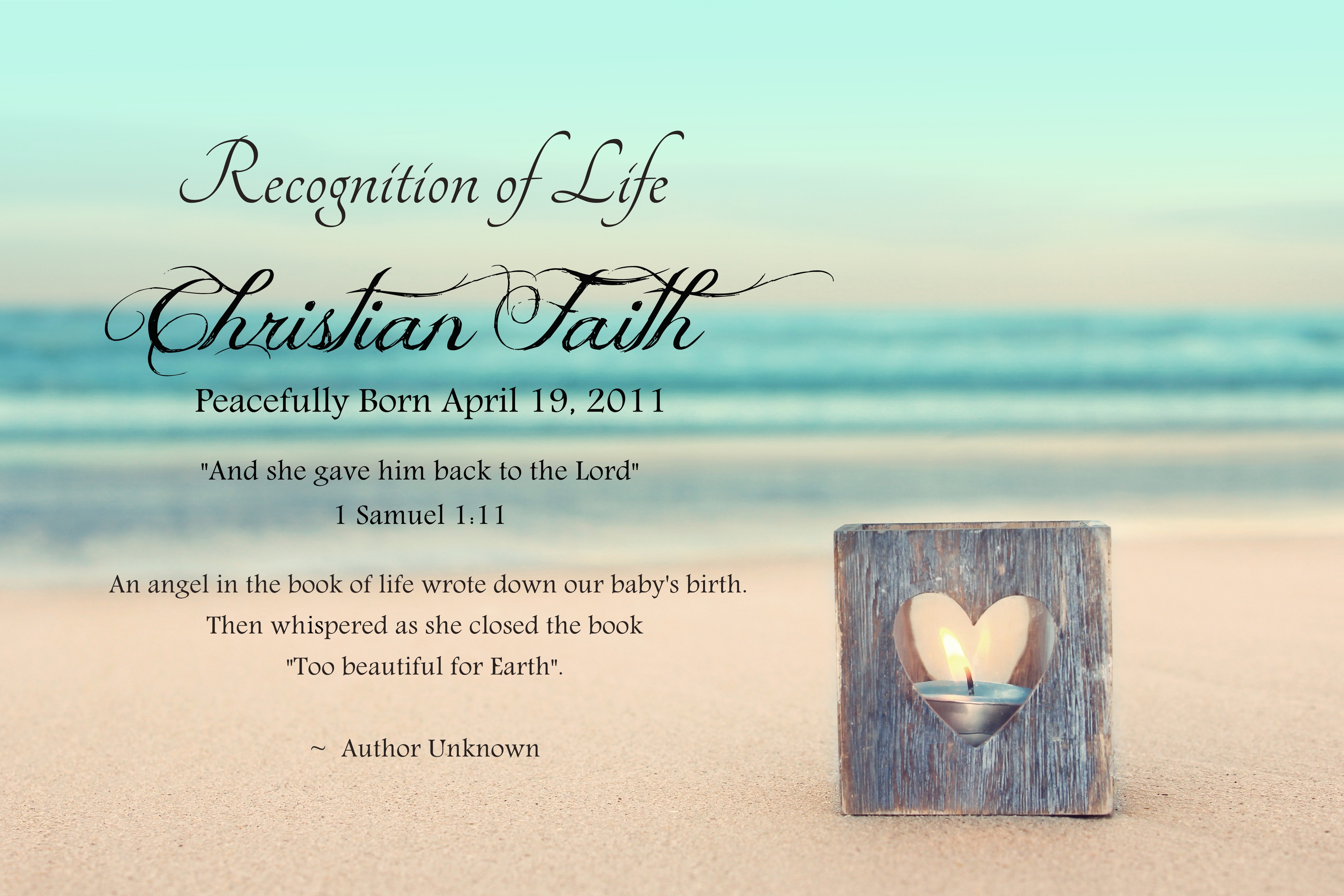
  • Consider printing out  special scriptures and quotes, on pretty paper, and use to fill the room with them.  Consider also purchasing a Certificate of Life, or inviting the mother to do so.  Collect these items at the end of the celebration, so that the mother can fill her home with these lovely, encouraging words.

  • It is important that each guest demonstrate the importance this baby has had on that individual.  It is okay to cry.  It is okay to say “I’m sorry”.  It is okay to give the mom a hug.
  • A tea candle might be lit after each gift is presented to the mother.
  • Special, personal gestures of love toward the mother should be made during this celebration, including brushing her hair, putting flowers in her hair, and washing her feet with a lovely scent (lavender perhaps) and with warm, clean water.  Touching the mother and singling her out in love is important.  It should be decided prior to the celebration who will wash the mothers feet.  This is a very personal, and very honoring, gesture.
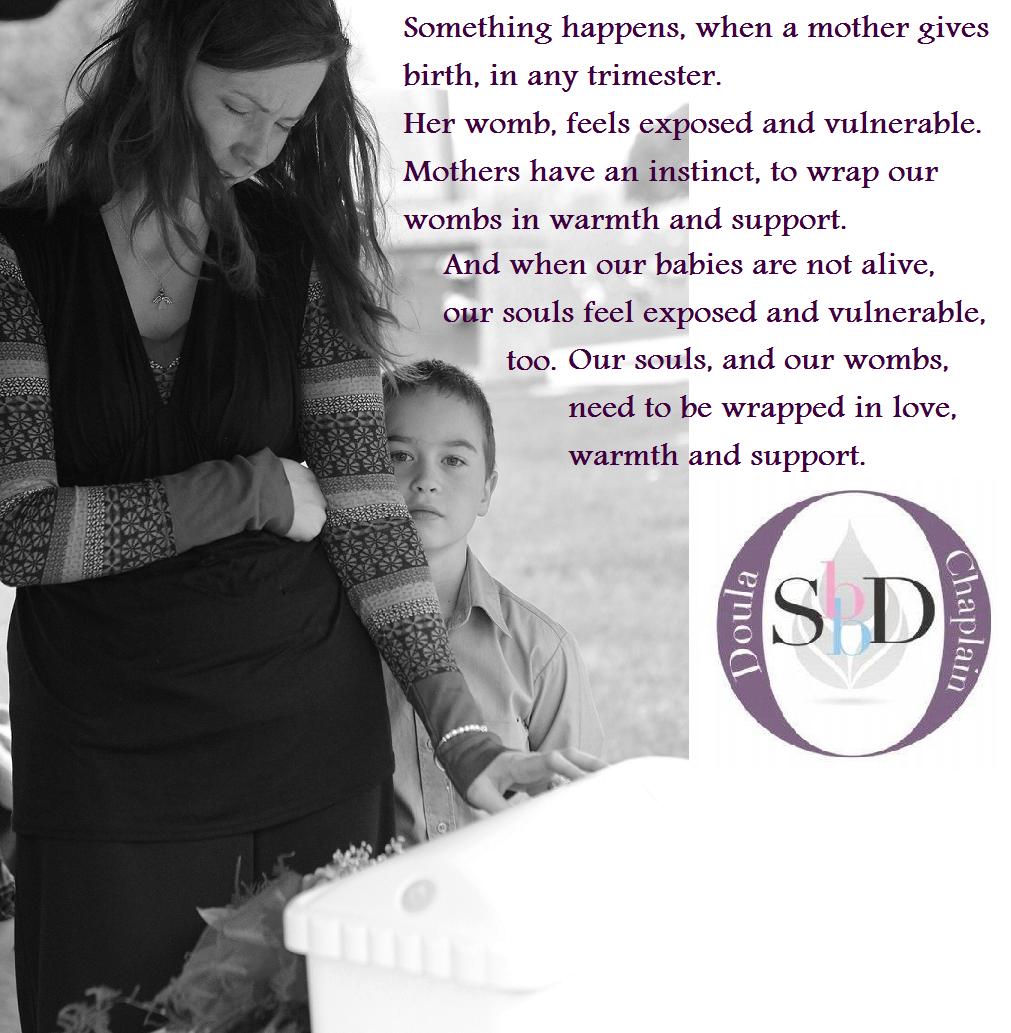
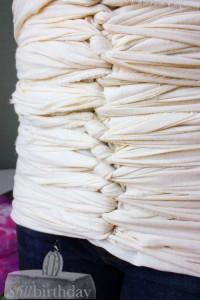
  • A special ceremony that includes wrapping the mother’s womb, with gentle music playing, can be very honoring.  The Womb Wrap we use in our Mothers Workshop is one very long piece of simple cloth.  Each person in the circle takes turns wrapping the cloth around the mother, whispering a special mantra, encouragement or prayer to her.  The wrap is not knoted.  The cloth instead, rised and weaves and so each whispered prayer loops together, never ceasing, wrapping the mother in a continued message of love.  In our Mothers Workshops, we also include a special warmth pad and we complete this portion of the ceremony with a brightly colored and breezy rebozo that jingles and sways gently as she moves.  You can purchase this Womb Wrap to include in your Sacred Circle, and the mother can utilize it after every birth, during menstruation, and absolutely any time she needs to be wrapped in warmth and love.  You can visit our Mother Roasting page for demonstration access to use your wrap.

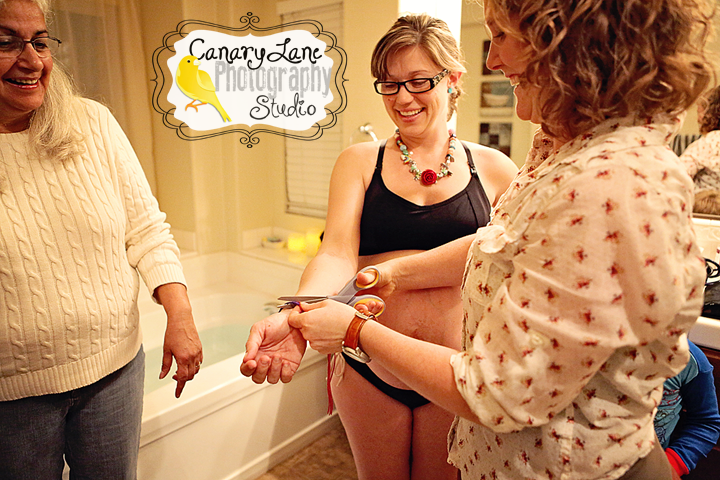
  • If this Sacred Circle is done during the mother’s subsequent pregnancy, it might include a special red cord tied around each attendees (left) wrist.  This cord is a reminder that there is a connection between the circle of attendees and to hold on through the pregnancy.  During birth, this cord is cut from each person’s wrists as a ceremonial ritual of release – release of fears, which can manifest during labor, and that it is time to open and birth.

According to the “Ask The Rabbi” column on the Ohr Somayach, Jerusalem website:

Wearing a thin scarlet or crimson string as a type of talisman is a folk custom among Jews as a way to ward off misfortune brought about by the “evil eye”. The tradition is popularly thought to be associated with Judaism’s Kabbalah.

The red string itself is usually made from thin scarlet wool thread. It is worn as a bracelet or band on the left wrist of the wearer (understood in some Kabbalistic theory as the receiving side of the spiritual body), knotted seven times, and then sanctified with Hebrew blessings.

A custom that is based on Torah ideas or mitzvoth may also have special segula properties on a smaller scale. Regarding the red string, the custom is to tie a long red thread around the burial site of Rachel, the wife of Jacob. Rachel selflessly agreed that her sister marry Jacob first to spare Leah shame and embarrassment. Later, Rachel willingly returned her soul to God on the lonely way to Beit Lechem, in order to pray there for the desperate Jews that would pass by on their way to exile and captivity. Often, one acquires the red string when giving charity.

Perhaps for these reasons the red thread is considered a protective segula. It recalls the great merit of our matriarch Rachel, reminding us to emulate her modest ways of consideration, compassion, and selflessness for the benefit of others, while simultaneously giving charity to the poor and needy. It follows that this internal reflection that inspires good deeds, more than the string itself, would protect one from evil and harm.

Cutting the cords during the subsequent labor and birth, marking the release.

Photo belongs to the amazing Canary Lane Photography Studio and SBD doula student.

  • Consider taking photographs of the celebration, to send to the mother, to remember her special celebration and fellowship.
  • The celebration might close in a prayer over the ladies present and families represented, and over the meal that is to follow.
  • The meal should consist of one item brought by each guest.  Leftovers should be given to the mother to take home.

The focus of this celebration is to honor her as mom, to share feelings, and to encourage and uplift one another.  The tone should be kept inspirational, validating and loving.  You might invite a local SBD doula or Heidi Faith to help coordinate or guide your event.


Related: Mother’s Workshop    Related: Mother Roasting

Related: Stillbirthday Sacred Circles

Related: Heidi Faith’s Workshop page on Facebook

A place specifically about our workshops & Sacred Circles.

Photo belongs to the amazing Canary Lane Photography Studio and SBD doula student.

Share Your Stories

Infant and pregnancy loss stories benefit us because we learn that we are not alone.  Carrying forth a pregnancy to term invites joyful gifts, meals, and fellowship with other families.  Pregnancy loss simply makes people uncomfortable.  Friends with round bellies stuffed with God’s newest creations waddle in the other direction, heartbroken for us and wishing not to make the situation more grievous for us by reminding us of our broken hearts and empty wombs.

There is a very real comfort in simply knowing that another mother has walked the path we are so newly stumbling upon.

I’ve looked for a meaningful way to say “thank you” to the mothers who’ve shared their sad secrets with me, who have stood at the doorway of this secret society of aching parents to tell me that they lost a beloved child too.

While building this website, and adding their stories, I realized that they were not only ministering to me, but to all of the mothers who, through their own losses, find their way to this site.

In the middle of my sharing about my experience online (via Facebook), Dawn Gilner read about my broken heart and sent me her book, “I Miss His Everything” and gave me permission to use it as I see fit.

Offering this book as a “thank you” to one of you lovely mothers is just a tiny token, but this book is so tremendously beautiful and valuable, I know it will surely bless you.

Some of you have shared your story for the very first time at this site.  How frightening and intimidating that must be.  Some of you have rehearsed and told your story so many times that you could recite your experiences by memory as you read your own words here.

All of your stories are valuable.

You have each extended love and mercy to the broken hearted mothers who will find their way here.  Now, even the very first mother who comes here looking for miscarriage support will know in all certainty that she is not alone.  You will have given her hope, which is a vital lifeline during such a tremendously devastating time.

I mean this with all sincere urgency, importance, and gratitude: thank you so very much ladies.

October is National Pregnancy and Infant Loss Awareness Month.

It is also about the time that I would have delivered my sweet baby, who was instead born via natural miscarriage on April 19.

Instead of being able to lavish love onto my sweet precious baby, I turn to you, mothers, to offer a gift of love to you.

Every mother who submits her pregnancy loss experiences to this site before October (2011) will be automatically entered to receive the book,

“I Miss His Everything” by Dawn Gilner.

To share your story, please follow this link and the simple instructions that follow.

Let me specify, I am in no way earning any compensation for passing this book on.

What I have gained from having this book, is worth much more than money.

In her book, Dawn Gilner walks us through her experiences of having live, happy children, but also of experiencing three miscarriages, the death of her 8 month old son Maguire, and the stillbirth delivery of her son Titus.  In such a horrific, unspeakable, overwhelming amount of darkness and loss, I am totally marvelled at her ability to show such life, such love, such deep, profound healing, in her own heart, and in her family.

Dawn brings us through the day her son Maguire died in a way that seems so relateable, so natural, so casual, that each sentance literally makes you say, “I would have done that….I would have done that…I would have done that, too….” She nails it, the moments in our day that we speak to ourselves about our children, about our feelings about them, and about the different responsibilities we have.  I kept reading, totally captivated by the normal-ness and simplicity and the way she articulated my very own mommy feelings…when I suddenly caught my breath, realizing that the dreadful climax must surely be coming…after all, I knew the name of the book, I knew what this was about…”oh NO” I thought, as I realized I was unable to even contain myself to finish reading the words, but caught myself scrolling through the text to the end of the paragraph…searching for the agonizing sentance, the dooming conclusion to the day’s events, so that I could quickly move on.

I put the book down, and realized how easily her words could have been my own, and prayed thanksgiving at her courage to put such powerful expression into writing.

Then, I went back to the paragraph I did such a disservice to by scanning through it.  Every syllable crushed my soul.  I cried.

And, this was only the first chapter.

Would I be able to do this?  To finish this book?  Would it only hurt me further?

I kept reading.

I don’t want to give it away, but by the end of this book, Dawn concludes her writing with a profound message of hope, not merely survival but joyous victory and triumphant love.  It is a book that every mother and father who experienced pregnancy or infant loss would be changed for the better by reading.

Here are just a few of the very important (and too often overlooked) experiences in our journey through loss that Dawn captures and discusses so very eloquently:

  • guilt, and having a healthy perspective about it
  • relationship with spouse, and how loss may impact it (for better or worse)
  • differences in grieving between husband and wife
  • what to tell your other children
  • breastmilk after loss, and what to do about it
  • other practical advice, like packing to go to hospital to deliver a dead baby
  • information about induction after previous Cesarean
  • helpful and hurtful medical perspectives and approaches
  • having a hyper-alert sense of dangers to your other children
  • importance of loved ones
  • healthy and unhealthy expectations of loved ones
  • helpful and unhelpful reactions of loved ones
  • perspectives on each of our own losses being different
  • different feelings you may have when your baby looks “less than complete”
  • reasons for our different grief reactions (stages, and durations)
  • the possibility of healthiness in our seemingly most unhealthy reactions
  • anger at God, feeling betrayed and attacked by God
  • reconnecting with God, realizing who the fight is really against
  • outlines, throughout the book, and particularly at the end, practical steps to finding your “new normal”, including learning to celebrate the day your baby died

One of my most favorite things about this book is the way that Dawn shows the larger-than-life legacy that is left behind by our lost children, and our responsibility, and our priviledge, to discover it and find ways to carry it forth.  Family, friends, even strangers can all be impacted–positively changed–by our tiny children, if only we allow their little figures to make the great big impact that they lived, and died, for.

Besides writing and publishing this book, one other practical way that Dawn honors her son Maguire is with an Angel Day 5K run, to raise funds for headstone costs for infants of bereaved parents.

Dawn, your story is so captivating, so moving, so heartbreaking and so inspiring.  Thank you so very much for passing it on to me, so that it could be an encouragement to another mother to also share her story with others here at this site.  In October, when I would have been bestowing love onto my newborn, I will instead find peace and pleasure at giving your book to another mother.  Your book has helped me heal, and it will help another.

Announcement of the Winner:

The first week of August 2011 marked the official launching and public presentation of stillbirthday.  To make the site as comprehensive and as supportive as possible to mothers who come here, I petitioned mothers to share their stories of pregnancy loss, and doulas to list their services through the process of miscarriage and stillbirth.

We have since received hundreds of letters, from mothers generous to share thier broken hearts, willing to let us learn about the lives, and deaths, of their precious children.

Sharing our stories is extremely important, because it lets us know, in a time that is tragic, overwhelming, and intimidatingly lonely, that other mothers have braved the path that we are so newly stumbling upon.  It lets us know that we actually can do this, somehow.  We can grieve.  We can heal.

I am so extremely humbled by the words poured forth from so many aching, hurting, and healing mothers, all at different points in their journey after loss.  I am overwhelmed with appreciation to each of you.

Dawn Gilner donated her biography, an account of her experiences as a mother enduring losses, to stillbirthday.  We both agreed to use the book as an incentive to offer to mothers who first shared their stories at stillbirthday, from August until October 14, 2011.  These first stories here at the site are tremendously valuable to me, because it fills such an important aspect of this support site: confirming that the mother isn’t alone.

I randomly drew from all of the mothers’ names, to select one mom who will recieve Dawn’s book “I Miss His Everything.”

The mom who will recieve this book is Stormy.  You can read her story of her son Gideon here: Stormy’s Story About Gideon.

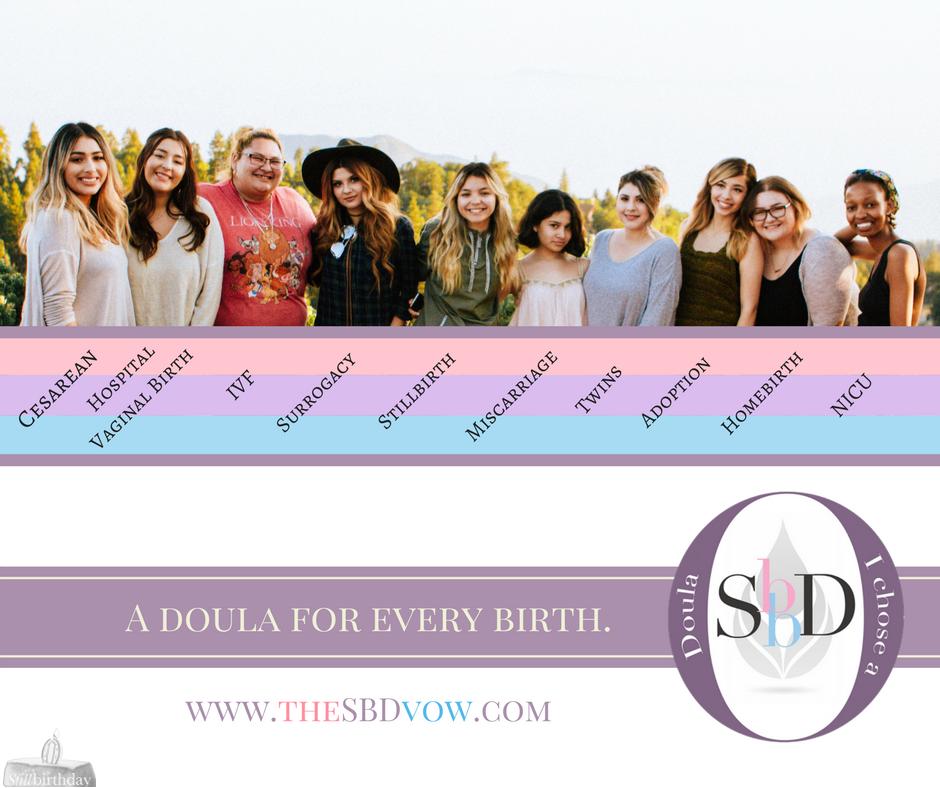
The SBD® Doula provides support to families experiencing birth in any trimester and in any outcome.

Here at stillbirthday.info, you can learn about the SBD® Doula.